

Multifamily Blogs
How a Self-Proclaimed Troublemaker Built a Powerful Solution for Affordable Housing

How a Self-Proclaimed Troublemaker Built a Powerful Solution for Affordable Housing
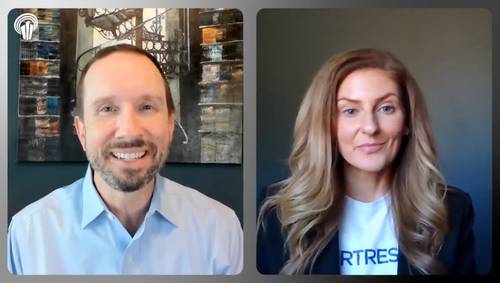
Do people seek a supplier because they have a problem they want to solve, or because they have a solution already in mind? It was a fascinating question that popped up in my interview of Kerri Davis regarding her founding story with FORTRESS OS.
We delved into strategies for developing a new software solution, how to avoid "tech debt", and viewing affordable solutions not just as a module bolted on a market-rate solution, but one of my favorite parts of our conversation related to the idea of how we solve problems in multifamily.
As an industry, we're natural problem solvers. While we often talk about starting with a problem statement, Kerri shared that potential clients frequently come to her with a solution already in mind. Drawing on her expertise, she peels back the layers to understand why they want that particular solution, since it may not be the best fit for the issue they're actually trying to solve.
She half joked that if you haven't asked "why" 10 times, you likely haven't gotten down to the root issue to be solved.
Kerri's founder story is incredible, and we delved into interesting issues that affect multifamily in a broad way, and even a dive into the "delete" method that drove Tesla's designs, so I hope you watch the entire interview.
Brent Williams: Hello, everybody.
Today I have the joy of talking to Kerri Davis, the Founder and CEO of FORTRESS OS, as well as the partner at Bedrock, who they now manage 30,000 units.
So she has a really interesting story about straddling both the operator side and the supplier side and how they developed Fortress to solve the challenges that they were not able to solve through external providers at the time.
So Kerri, thank you so much for joining us.
Kerri Davis: Yeah, thank you for having me, Brent.
Brent Williams: I want to hear all about your story, and I'll let you decide, where does the Fortress story begin? Why don't you rewind the clock for me?
Tell us where you started seeing challenges that you weren't able to solve through other means and how that decision making process began?
Kerri Davis: Well, Brent, I think that, you know, in order to really tell the story of Fortress, I think I have to start just a little bit before actually joining the real estate industry.
Because as you know, I think especially as a founder, you will know, I think a lot of like what pushes us to become founders actually happens before we start our first company.
I don't know if you'd agree with that, but...
Brent Williams: Absolutely. Yeah, sure.
Kerri Davis: Yeah. I mean, you know, I look back and I'm like, I was always such a troublemaker no matter where I was at, like what company I was that I was always such a troublemaker.
I almost got fired numerous times. I didn't, I was never fired.
I towed a line very well, apparently, but like, I just constantly was so frustrated by working with people who didn't work as hard as I did.
Especially when you're lower level at a company, you always realize that the person who's working next to you is probably making the same amount you are, but when they're like slacking off and or they're just not very smart or whatever it, I mean, I'm sorry, but it's just true.
But like whatever it is, you just are so frustrated.
So I was always a bit of a troublemaker.
So I kind of go back to like my troublemaker roots when I talk about why Fortress exists.
I eventually took my troublemaker self and joined a property or real estate firm that was just starting in Nashville.
So there were four kind of founding partners who were really building this real estate enterprise.
This is about 14 years ago and they had just started; they were acquiring their first 600 unit deal, which is actually what caused them to need to hire someone.
So I was their first full time employee and I was mainly set to manage all their back of house operations.
I'm an accountant and an attorney, so I was really focused on setting up all of their risk management contracts, finance, HR, IT, all of that for a really small company at the time.
And then fast forward two years later, and we were managing 5000 units, and the business partners asked me to kind of step in and start working on the operation side of the house as well.
And we were primarily affordable, which as you know is a very specific niche in our industry.
It requires a very different type of workflow and structure and different talent, different focus.
And I just felt like the software that we were using just really didn't support us in that way, and I, you know, didn't immediately think I needed to build my own.
I went out and interviewed all the usual suspects, hardcore, and actually rolled out two additional platforms.
So we were a 6000 unit property management company running three different core operating systems.
Brent Williams: Oh boy.
Kerri Davis: Yeah, my team did not love me for that.
They stuck with me though, and so we tried them out and at the end of that trial I was like, that's it. Like there has to be a better way to run affordable.
My biggest problem was that all the other systems treated affordable like a module, right?
It's a separate database, a separate architecture, and I just disagree with that inherently.
I think that affordability is a part of that property at its core, at its core level, and it needs to be a part of that primary database, primary architecture, and it impacts everything that you do.
And so I went to my business partners and said, hey, like here's a plan.
I think we can do this.
We passed a hat and started building Fortress.
And I also tell everyone, if I had known then what I know now, I never would have done it.
It was honestly like the fact that we're where we're at is probably a one in a million chance, like it was so hard.
I probably spent like 2 years, you know, like not taking vacations, working like 16 hour days, seven days a week.
It was pure insanity.
I probably should have been locked in a padded room, but now, of course, I'm so glad I did it.
I love what we built.
I love our company, I love our customers, I love our team.
And so, yeah, I think that's, sorry I started with the troublemaker thing, but I think that's really what pushed me to build Fortress was just that that's who I am as a person, and we were really struggling inherently with the way the systems work.
And so, we built it, and now we have a platform that really focuses on affordable property management in a really special way.
Brent Williams: I think that there's a common thread for there's a certain level of, I don't say being naive about what the challenge could possibly be, but I remember going through that and looking back, I was like, how did I even just jump into that?
That's wild that we took that decision.
And if I again, similar to you, if I'd known what I, you know, I knew now, would I do the same thing?
I don't know.
But it's kind of nicer to, you know, when we're younger and we just don't have any fear and we're just like, let's just do it.
Let's just see what happens.
I think that's fantastic.
Kerri Davis: Yeah. It's kind of like, you know, state ignorance is bliss.
I don't know necessarily about that, but like, I feel that ignorance gives you like that lack of fear.
So you just do the thing.
And, you know, I'm grateful now I did it, but if I had known, I wouldn't have done it.
Brent Williams: Yeah, absolutely. Absolutely.
And I think that you have a really interesting background of accounting plus legal, which is such a perfect marriage for what you're working on right now.
I mean, you can't ask for a better background than that.
So what I'm really fascinated about is how you built this up and did you build it in stages or...? Because a PMS is so different than a lot of other types of supplier startups in the sense that they can be much smaller.
The minimum viable products for another type of supplier could be very, very streamlined.
Whereas PMS you need so many core functions.
Did you do it concurrently and keep some of your other pieces from your existing property management software?
Did you just build it all out at, at one time to some degree?
Like what did that look like?
Kerri Davis: Yeah, so I'll answer this with complete honesty and humility and own up to a big mistake that I made.
So when we first started building Fortress, so after we passed that hat, now we did take a small interim step where we're like, OK, maybe we don't need to build Fortress.
Maybe we just need to build a dashboard and we can just build like a, you know, some sort of a feed from the property management software we were using into this dashboard where our teams can use that.
And at the end of the day, that did not help with our workflows and our turnover rates and all these other things.
So we're like, OK, we've got to build a full PMS and then we scoped out what that looked like.
And I did, in that moment, make one very strategic decision that really allowed us to move faster than and then most PMS's would, which is we didn't build an accounting software.
Now, of course, being an accountant, I came from a world where, you know, I'd worked in a lot of different industries as an accountant and we always used a core accounting software that linked into the integrated bidirectionally and in real time, very deep integrations with operating software.
So whether that's like your point-of-sale solution for a merchandising store, whether that's your POS for a restaurant or even like a law firm.
I worked at a law firm where I managed their financials and they used a legal software that integrated with accounting software.
Ninety percent of the businesses in the United States use separate accounting software from their operation software.
So when I first landed in property management and those two things were like two of the same system, I was like, why did they do this?
Like, why would you rebuild what is already a phenomenal accounting platform in the Sage Intaccts, JD Edwards, Oracle NetSuites of the world.
So we made that really strategic decision, which essentially cut our build in half, right?
And so that was really helpful, and that is still what we do today.
We integrate with a preferred partner, Sage Intacct, but we also have several other accounting integrations and they all work really, really well.
Our customers love the experience, so it works out.
But then I think the second part was, you know, a little bit of ignorance on my part.
I hired a head of technology who came in and was like, "OK, in order to build this massively complex property management software, we need to hire this team of engineers and they need to come in and build all this out in the back end, and then we'll build the front end."
And I was like, "OK, I have no idea how long this is going to take."
I'm an idiot when it comes to this stuff.
I'm like, that's fine.
So then like 3 months, four months later and like $300,000 later, there's nothing I can see.
I can't, I can't really see anything.
I can't test anything.
I can't understand what's happening.
And so, I said, "How much longer is this going to take?"
And he was like, "Six to nine more months," and I was like, "Oh, no, I can't trust you to take another 6 to 9 more months and another $1,000,000 to build something that I can't even see, that no one can see your test."
And he was like, "Well, this is how I'm going to do it."
I was like, "Oh, this doesn't sound right."
So I reached out to some other CEO's that I had the luxury of having connections with and said, "This is what's happening."
"What would you do?"
And they're like, "Oh, yeah, that's terrible."
"You really need to start."
"If I,"-- the CEO's I was speaking to-- "could go back in time and do it all over again, I probably would have started with an outsourced company that develops as a job, like as a function."
"That's just what they do."
"So you reach out to them, you tell them what you want to build and they'll help you get it started and they'll help you set up the structure of building, the infrastructure of building, and of course they'll build, but it's really the infrastructure of building that you need."
And I was like, "OK." So, I met with a couple of groups, signed on with one, and they immediately started asking me like, "Well, what's the smallest thing we can work on first?"
And I was like, "Well, if we just start at the beginning, it's the prospect.
So it's your lead and like how a lead comes in and how you deal with the lead." And three weeks later, I could test creating a lead in a system.
And then, you know, of course, we moved on from there.
Now I will say though, that we didn't deploy this to any units until the software was done.
So it took us a year and a half of straight development, and that was also while I was still running the property management company, also the president of the property management company.
So lots and lots of very late nights and long, long weeks.
But yeah, so we couldn't ship it until we were able to replace the PMS that we had.
But then once we did, we did.
Brent Williams: So, give us a timeline here.
How far back are we at this point?
Kerri Davis: Goodness.
OK, so we actually started building the product in about 2018 and we rolled it out in about 2020 to some properties.
And I'm also humble enough to admit that we rolled it out to some of Elmington's owned assets.
And when the first property manager got access to it, she called me and she was like, "Hey, like, this is so exciting."
"It's really pretty."
"It's really easy to use."
"But where are the reports?"
And I was like, "Oh, there's no reports."
And she was like, "Oh God."
So, I said, "No worry, we have a solution for that."
"It's in the back end."
"We run some queries."
She was like, "What's a query?"
I was like, "I don't really know either."
"We're figuring it out."
So yeah, it was an interesting experience, but yeah, that was probably, that was back in 2020.
We ran it on Elmington, now Bedrock for about two years exclusively.
And then 2022-2023 we started selling it externally.
Brent Williams: So, I think decoupling the property management software with the accounting is so key, because I think that what it does, I think that sometimes the accounting really locks in companies into pathways that are not ideal, especially when you have integrations in this sort of thing.
Suddenly the accounting software, it traps people I think to some degree.
And I think that kind of decoupling that is really fascinating.
So just out of curiosity, if you were to go through that process again today, would you do the same process as far as going out and finding a company do the same thing or how would you go to that differently, if at all?
Kerri Davis: 100%. So, Brent, you know, I've chatted a little bit about this, but like, obviously the world is a very different place now than it was when I started building.
And you know, you even brought up you utilizing AI to build your own internal solution in your tooling.
If I wanted to go build a solution for my company today, and I hadn't started Fortress and I was still working at Bedrock and I wanted to build a solution, I would still hands down, 100% do the exact same thing that I did.
I would go find a tech partner who their job is to deploy technology for customers because they know how to bring you the infrastructure.
And honestly, in most cases for them, it's generally plug and play at this point, right?
They've built the tech stack, they've built the architecture, the process around development so well, that they essentially just take that, make a copy of it and give it to you.
They put it in your instance, whether you're working in AWS or another cloud-based storage system, they'll give you that infrastructure, they'll plop it in there and then they'll start building off of that that they will save you untold amounts of time and energy and money setting up that infrastructure.
So yes, even though you know, you might say, "Well, I can go to AI and start building right now," You can.
The problem is scalability, maintainability, deployment, all of that sort of stuff.
Those are the things that we don't as non-technical humans, we don't really understand.
And having an expert set that up for you day one is going to eliminate so much to what we in the industry called tech debt, which is where you have to go back and spend tons of money to fix things while people are using it, which is the worst experience.
Brent Williams: Right.
Kerri Davis: So eliminate that. I would hands down still recommend that to anybody.
Brent Williams: We have a fair amount of tech debt at MFI, and so that's always a challenge because we want to develop new things.
And so, we're thinking, how do we add it on, or do we, you know, scrap it and then restart.
What I do find AI to be fascinating for is to create such developed site mockups that when you do the hand off, then there's no question about what's supposed to happen in this scenario and how different pages are supposed to flow.
It's already done.
So they can just make it in the proper way versus, you know, and there's just less confusion about the whole process.
So it's really a fascinating time with developments for sure.
Kerri Davis: Yeah, it is, it is, and you said it really well.
Like AI is helping both with product, whether that's building out your requirements or literally creating a vision around what you want and engineering and making sure that we're building it right.
And then long-term, managing that tech debt.
So having AI that's actually constantly reviewing your database, your architecture to see if there are areas that need improvement, especially as you're deploying new features on top of it, bring that new feature to what was already in the instance.
There's so many different layers of it.
And having specialists who understand each one, I think, is still insanely valuable.
I would not, I would definitely not give that up today, at least not if you're looking at building a solution that you're planning on having, you're planning on scaling.
Brent Williams: Have you, have you planned out a change in how you view security?
Because I know that's becoming so much more of an issue right now with so many, you know, agents breaking in however they want to at this point.
Kerri Davis: Yeah.
Brent Williams: So how do you deal with that?
Kerri Davis: Yeah, it's a great question, and I would be the wrong person to answer the question in depth.
What I will say though is that we are heavily in bed with AWS.
So AWS is how we manage our entire back-end infrastructure.
We work with them honestly, AWS even helps us in terms of like funding for specific projects that we work on with AWS strategic partners.
Like we are a very loyal AWS customer.
And because of that, we work with them on all of our security infrastructure as well.
So as they are deploying new security protocols, they're releasing a lot of those to their top tier customers and telling us what they're doing, how we follow in their footsteps, the things that they would recommend to us.
And then we also have stock one and stock two compliance, and we have consultants who manage that for us.
So they're kind of on the front end of that, making sure that they're sending releases and information our way and how we work through it.
I'd say it right now, it is just an incredible game of staying on top of what's happening in the industry and what tech is being released to help us manage all those processes.
Brent Williams: Absolutely.
So you've launched now with your core product and you're able to then validate it internally, which I think is so important.
I mean like, not important, I mean there's plenty of companies who don't have that, you know, that benefit, but to be able to have it like they'll run real time.
How is it actually working?
Stress test in so many different ways, is so interesting of a business model and, we're seeing more companies do that where they're developing things internally and then sometimes then they're rolling out as their own independent suppliers, kind of like what you all have.
So tell me about this next progression of, how did you then kind of iterate? How did you start then go to market then? Let's talk about that piece as well.
Kerri Davis: Yeah. Oh, goodness.
OK.
So those two years where we really kind of stress tested the product inside of our own property management company were really intense also.
I would say that the intensity did not die down once we released.
In fact, it probably increased a little bit for a period of time where we realized all the gaps, all the holes that we had to fill, all those sorts of things.
And so we worked very, very closely.
Of course.
I mean, at the time I was running both of the companies.
So of course the companies were very much intertwined.
And so we worked very closely with our property management team, you know the regionals and RVPs who were reporting to me.
Also, we're meeting with the Fortress engineering team on a regular basis to make sure that we were sharing the business requirements that we were working together to create a really great product that worked for the on-site teams and for their customers, the residents, the applicants, those sorts of things.
It was tough, I won't lie, you know, especially when you've got two teams who kind of have a little bit of a different goal.
You know, at the end of the day, I think that it was healthy that we acknowledged that there were different goals between those two companies, but found a way to work together as true partners.
And of course, that's just about having the right people in the right process to make that happen.
But then once we felt like we had a really sustainable product and that truthfully, that Bedrock, then Elmington's, clients were happy.
I mean, we have clients like AIG and Alden Torch, like they had to have an operating system that functioned correctly and that reported correctly and all those sorts of things.
So once we felt like not just Bedrock was happy, but their customers were happy, we decided to take it to market.
And I will say even, you know, I've also talked about this a little bit, the difference in the type of capital that you raise.
So you know, we didn't raise venture growth equity, but early on still really kind of haven't.
And so, we have a lot of flexibility in who our customers are.
So honestly, we've continued to just bring on groups that are very similar to Bedrock, Elmington.
They're partners with us.
So they do betas with us.
We'd meet with them on a monthly basis to talk about how the features are working, what new features they want to see.
They have their own kind of like list of things that they'd like Fortress to do and build.
We're very, very close with them.
We don't, we call them partners more than customers.
And so, it's been a unique go-to market experience, I would say.
And then the fact that we get to focus on affordable housing also makes our go to market a little bit easier because we know exactly who we're targeting.
Brent Williams: One of the biggest, I've told you this before, one of the biggest requests that we get from Multifamily demo Day are more providers that are specific to affordable housing.
It is so underserved.
And so, when you know, you all come on and it's like people get so excited.
I love it.
Now, when, when you work with new companies, is it difficult to tell them no?
And the reason why I ask is, I talk with suppliers and they go, well, we have our kind of our initial client and they're the initial client defines so much about how they develop their product because, you know, it's a scattered site, you know, portfolio and it's so much different than when you have, you know, people, boots on the ground at the property working, you know, there or different scenarios at all.
So, how do you manage that process where they would they would like to go a certain way, you want to have them be a partner, but then you got to say no sometimes.
How's that work?
Kerri Davis: Yeah, it's a great question.
And not that we never say no, but instead of saying no, we essentially bring the road map in, and we're like, hey, this is what we're working on.
These are the things that we're prioritizing.
Would you prioritize anything that you're asking us over any of these things?
And honestly, most of the time the answer is no.
Our customers are very bought in, they're very engaged, they're very excited about the things that we're building.
And most of the time, and this is not a knock on customers, but our customers' job, right?
They're property management operators; their job is to continue to do like A, B and C.
Their job isn't to think about how could technology transform my job so that B and C aren't even required anymore, right?
That's my job, that's my company's job.
And if my company is thinking, hey, we don't even want you doing B in the next three months, but they're trying to tell me to enhance B.
They don't, they just don't know, right?
And so, if we come in and we're like, hey, I hear you doing that would make B a lot better.
But here's our goal to get rid of B.
They're like, oh yeah, absolutely.
That's totally fine.
So I think it's more about that over communication and keeping your customer in the loop of what you're working on and why you're working on it that makes a really big difference.
Brent Williams: I think the problem statement is so difficult because even if so, you have, you know, a supplier's understanding the problem statement, you have an operator's understanding the problem statement, but even on the operator side.
So I was thinking about this recently.
It's like I used to work on site, you know, I started out as a leasing consultant, which is kind of a strange career path for me, but because I was coming from finance, but I wanted to understand how apartments ran because I knew I wanted to be in the industry.
I was one of the few people who were like running head first in a multifamily, not just happen to find myself here.
So I jumped into leasing apartments, which I was horrible at, by the way, just a little side note, not a good salesperson for leasing apartments.
Kerri Davis: That shocks me actually!
Brent Williams: It was not good.
I was so, if they give me any pushback, I'm like, "OK, I understand that."
Like I'll be so empathetic to what their needs were.
I'm like, "OK, well, then we're not the best fit for you."
Kerri Davis: That would be me.
Brent Williams: But ultimately, I was thinking about it.
I was like, you know what, it's been, shoot, over 20 years since I've been on site.
My knowledge of on-site operations has degraded so much.
And now, granted, if I'd say on the property management side, and now I was some level in there, I would have a much closer understanding, you know, but I'd still, if you haven't worked there and touched it, you know, and not just doing a site visit where you come in for the day and everybody's kind of coming and welcoming you for the day.
But if you haven't actually worked there, you know, your knees, you know, deep in mud, you know, then, then there might be a disconnect on what they're, you know, what they're struggling with.
With my teams, when I have something that I haven't touched in a couple years and they just took it over, I don't deal with it anymore.
I don't, I don't remember what the process was or the hiccups might be on how we can improve it.
So I think there's sometimes a disconnect on what the actual struggles that they're facing and how we can actually solve problems like that.
Kerri Davis: Yeah, I would actually take it back a step further.
And you said like the problem is in the problem statement, but I would actually take it back even further, which is that our customers rarely give us a problem statement.
They give us a proposed solution all the time, right.
Our customers come to us and they're like, we want B to look like this, we need this and B.
And it's so easy to just take that and then do it and make that essentially the problem statement, which was B doesn't do X or whatever, right?
And that's not a problem statement.
That's a solution described as a problem statement.
Brent Williams: Yeah.
Kerri Davis: And so like, it's so hard to not only make sure that my team is doing it, but then also to try to train your customer to speak that way and to not bring us a solution, but to actually bring the problem.
And so, we're constantly saying, "Why?" Constantly, "Why do you need that?"
Like, and for my product team, it's like, if you haven't said why ten times, not even five, fives not enough.
If you haven't said why 10 times, like you haven't gotten to the true problem statement yet.
So, but you're right though, I mean like digging in and figuring that out, it's hard when everyone today, especially just humans in general, we're just geared towards solutioning.
We want to bring the solution, not talk about the problem.
And if you don't ask the questions, you don't really understand the problem.
Brent Williams: Well, yeah.
I mean, when, you know, the people who are coming to a solution provider are going to be, you know, they're executives. They've been around a long time.
That's their job is to solve problems and to say, let's not do that.
Let's just boil it down to what you're actually struggling with.
And let's go from there together as partners because I think that, you know, there needs to be an understanding that the supplier side has a very, very unique perspective on how to solve problems in different ways that actually is going to add a ton of value to the overall solution.
You know, you want to you want to combine both sides of things together, the supplier and the operator side.
And then that's when you kind of come to the, the real, you know, the real solution versus just taking one, you know, perspective.
Kerri Davis: Yeah, absolutely.
Brent Williams: So all right, take us what you're into, what you're developing now.
What's the next phase of Fortress look like?
Kerri Davis: Yeah.
So you know, we've been working really hard on embedding additional solutions for affordable operators inside of our core operating platform.
That, so to date, we've really sold Fortress as like an all-in-one package for, on the operation side.
So, right, we don't really sell like the resident portal as a separate solution or like two-way texting or your, the ability to text back and forth with your residence or the maintenance app.
We don't sell any of those things separately.
For Fortress, it's like this is what you need to run a property in 2025/2026.
This is just what you get. But we've recently started to branch out into adding features that customers are now looking at and seriously thinking about buying, that we would not have seen our affordable customers buy two years ago.
So customers were coming to us and were like, "Hey, we're interested in Elise do you integrate?"
And so, we started talking through that and we're like, "OK, our customers are really interested in having an AI based leasing agent," but they were also saying to us, "You know, like these other products that are on the market are also expensive and we're rent capped."
"So we're essentially expense, cost capped."
"Like so how do we do this?"
And so of course we went to AWS and we're like, "Hey, how do we do this?"
"How do we add in an affordable leasing specialist, an AI affordable leasing specialist inside of Fortress that can be really affordable for our residents, or for our customers?"
"How do we do that?"
And so, we started working on that and now that leasing agent, Leslie, is now live.
And then we did the same thing with compliance.
We're like, OK, so the biggest pain point like that was our customers coming to us with a problem.
And we tried, and we solved that problem.
And then the other thing that we hear all the time from our customers is how hard it is to finish a certification, to complete an affordable file and how many man hours go into that.
How many times the applicant has to come physically into the office, like what that whole process looks like and the time that it's taking to go from an application to an actual completed file.
And so, we went to AWS with that and they're like, hey, and they, of course, made some recommendations to us on some strategic partners.
And so now we are, our big project right now that we're working with a few customers in beta on is Cora, which is our AI compliance approval agent.
And so those are the things that we're looking at.
Always, you know, what's really special about what we do, is that we do always have to keep in the back of our mind and this is self-preservation.
This isn't about being kind to our customers.
There's an element of self-preservation here, which is our features have to be affordable because our customers are literally income capped, which means or rent capped, which means that the income for the property is capped, which means their expenses are capped.
Like we have to find ways to do this in an affordable way.
Our customers won't use the products we deliver.
So again, I mean, like I said, I'm not a complete philanthropist here like I have, we're doing this in self-preservation, but it's also created a unique and fun challenge for my team.
Like it makes things a little bit harder, but it's also fun.
So I would say those are the things that we're working on right now.
It's like, how do we add in AI and AI features into Fortress in a way that really benefits our customers while doing it in a way that they can afford, and they can actually buy the products.
Brent Williams: I mean, I think you, there's all sorts of examples of something that would, people are surprised it was done for a certain amount, mainly because people didn't have the funds and they just made it work.
And how do you do that with limited funds?
It's I think, I think it was Disney that had a great story about that.
They got pushed into like this little, small location because it didn't seem like the animation studio wasn't driving things anymore.
All sorts of great stories about that.
I love how you create some constraints but still give them creative opportunity to solve those challenges.
And then people rise up to the task for sure.
Kerri Davis: Yeah, I couldn't agree more.
One of my favorite books, a book I read recently, I think that the author's name is John something, maybe McNeil.
Well, I don't remember.
Name of the book is called The Algorithm.
And John was the Chief Operating Officer under Elon Musk at Tesla for a long time.
And he talks about Elon Musk's kind of operating method, his personal operating method, which is what he calls "The Algorithm."
And it talks about how you should question everything, then you should delete, delete, delete.
So delete everything.
And obviously that ends up being a huge cost saver.
Like if you look at certain components of how the Tesla is built, it has reduced the cost to build the shell of a body exponentially over any other car builder, because they found a way to create the shell, the chassis of the vehicle with something less than like ten metal pieces versus every other vehicles like over 100.
OK, so if you think about not only buying 100 pieces, then you have to ship 100 pieces, you have to have someone assembling 100 pieces, all the nuts and bolts that go into that.
And so, a lot of times you can actually substantively reduce the cost of whatever it is that you're doing while making the experience so much better.
But we have to learn and go through that delete process, and it's very difficult as humans, we're just so mentally, I think, biased to think that what we've done is what we have to keep doing.
Like there's no way to get a car chassis down to five pieces.
Well, there is.
It took a lot of dang research, but there is a way to do it.
But it's hard.
And so, I think as humans, if we can push past that, we can create something really special.
Brent Williams: I mean, that's what we're seeing in the in the tech stack overall right now.
It's, we're seeing a lot of people hit the delete button, you know, and what can we do to make it simplified and smaller, but also still, you know, achieve the same results.
So definitely echoes what we're seeing in multifamily right now.
Well, Kerri, thank you so much for joining me today.
This is this is a lovely conversation.
I think you all are amazing.
Love working with you.
Kerri Davis: Brent, you know, we think you are amazing also, and we absolutely love what you guys are doing and Multifamily Demo Day is, in my opinion, one of the most successful conferences we've been a part of.
I absolutely love it.
So I think you guys are just doing something incredible too.
So huge admiration from my side.
Thank you for having me here.
Brent Williams: I appreciate it.
All right, well, thank you so much and everybody, thank you for watching my interview with Kerri and you will see more of her soon.
Thanks.
Take care, everybody.


Comments