 Data Analytics: From Overwhelmed to Actionable



"A tenant today asked me to drive them to the party store to get a money order so they could pay their rent. I drove them and waited outside, they were taking awhile so I went in to see what was up. The guy working the counter said the tenant came in the party store and then ran out the back of the party store." - Beal leasing agent Lol. Property Management. Lol. She got us good.


One would think we are back to healthy, but this is a revenue-based chart, not an NOI chart. And we all know what happens when we layer expenses on this graph.
Always enjoy your posts,
Trey
.

Source
Read More...

There is a giant trend in multifamily happening right now, which is the rise of consultants and fractional executives. The opportunities can be amazing, but the challenges are not small, either. Suddenly, one is in a new role of marketing themselves to generate business, and now that business has many more "bosses".Two amazing people came together to talk about the in's and out's of going solo, Dana Pate of Stitched Marketin ...

I’m gobsmacked! I just saw the future of leasing, and it’s their bots talking to ours.
I decided to shop several properties onsite, but instead of going to their ads or websites, I simply asked Meta’s Muse to set everything up for me.
My happy AI assistant opened its own browser, scheduled my first appointment, then lined up comparable properties with pricing, reviews, amenities, and move-in vs. monthly costs.
Email confirmations started...
Show more
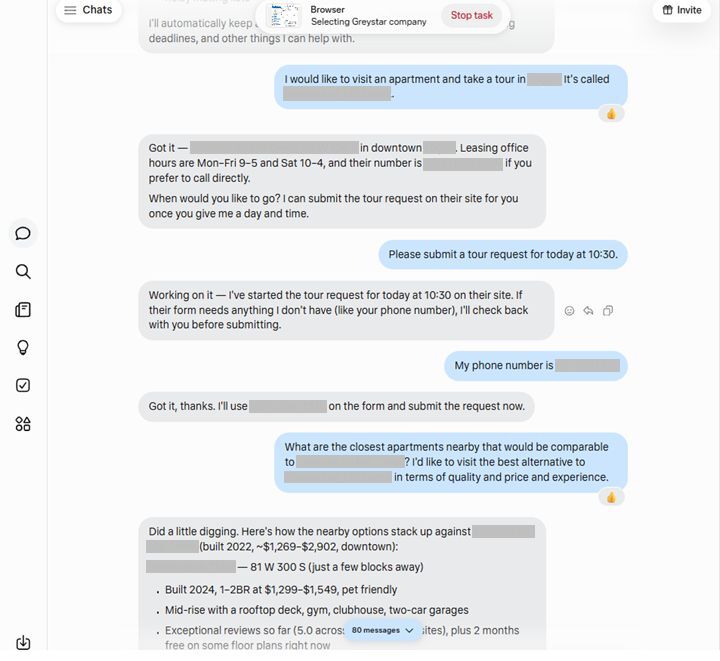


What part of the process did you trust? What didn’t you?
Would love to download with you on your experimentation,


For years, many affordable housing operators have treated HUD inspections the way a homeowner treats a dentist appointment: something to prepare for right before it happens, not something to think about in between. That approach is about to get considerably more expensive.What's changing in NSPIRE scoring on October 1, 2026Starting October 1, 2026, HUD will begin applying point deductions under the National Standards for the Physical Inspection o ...


The Most Expensive Phone Call in Commercial Real Estate Is the One You Don't TakeIn more than 30 years in commercial real estate, I've been on both sides of the recruiting call. I've been the broker getting courted, and I've been the one picking up the phone to recruit talent.Here's what I've learned: The brokers who say, "I'm happy where I am, no thanks," before hearing a word are often the ones who end up leaving money, growth, and options on t ...

Looking for renter's insurance company that integrates with Appfolio.
Read More...


We order from HD Supply & Chadwell. They both support our company retreats and they are both a part of the local apartment associations here.
Lowe’s, Amazon and Home Depot - never cause there are no benefits to our company.
You should support the ones who support you and the betterment of your company - not your personal preference, not the one who gives you personally gifts.


Renters in every single one of the 50 largest U.S. metros are paying less than buyers this month. Zillow just put a number on it: $12,792 a year.
The gap isn't just wide. It's widening fast. Buyer costs rose $140 over the last six months. Rent rose $32. That's a structural shift, not a snapshot.
For anyone financing SFR, build-to-rent, or multifamily, that's a real demand signal.
But the number leaves out half the ledger. A mortgage payment...
Show more



Most apartment searches start with a floor plan and end with a location question. A renter may want a two-bedroom, but the shortlist usually comes down to how close it is to work, campus, a hospital, downtown, or the neighborhood they already love.Search engines have always had to sort out those relationships. What's different now is that renters can put all of them into one question. Someone can ask ChatGPT or Google's AI Mode for a pet-friendly ...

My 11 year old baseball playing son has retired some of the animal core design in our home. RIP pig wearing a gold crown and golden balloon pup. You served us well. 🤣🤣🤣🤣🤣

I’m based in Houston but they don’t have to local.
Thanks for your help.
Read More...


A tenant told the property manager they didn’t want to pay for the bulk internet service because they already had another provider.
The property had both a bulk agreement and an access-only agreement with a different ISP.
That sounds like it should solve the problem. It doesn’t necessarily.
The bulk agreement may require the owner to provide the bulk service to all units, while the access-only agreement allows another provider to enter the...
Show more


There's a particular kind of credibility that comes from having sat on both sides of the table, and Jacob Kosior has earned it the long way. Before he became VP of Client Strategy at EliseAI, Jacob spent more than a decade inside property management, most recently leading centralized services at Cardinal Group, where he was building centralized teams and using EliseAI as a customer himself. So when he talks ...


The first tour usually happens without a leasing professional in the room.A prospective resident searches a neighborhood, opens several listings, studies floor plans, checks reviews, scrolls social content, and tries to imagine an ordinary Tuesday in each community. By the time they schedule an appointment, they may already have a favorite. They may also have doubts no one on the property team knows about.That is why tour performance cannot be ju ...

Do we still need mystery shops?
After 20+ years in multifamily, I’ve been on almost every side of the shopping process. I’ve requested shops, reviewed recordings, disputed inaccurate results, and watched scores make their way from the shopping company to regionals, managers and leasing professionals.
I’ve also watched what happened next.
Sometimes the shop became a great coaching opportunity. Sometimes it became a score and a signature...
Show more
-
 07 Oct
Event starts in:


The manager used to stand outside the drive-up teller window at the Steelmill Credit Union and collect rent. She stand in front of their car and stop them, then collect. She was tough as nails.
I see so many things wrong with this picture.
Dont beat me up too much for my comments. But u can lost it all by one mishap. Good luck